
We’ve all felt it—that sense of peace when we step into a forest. We hear the rustling leaves. We breathe in the scent of earth and pines or eucalypt. We feel the cool fresh air. It’s more than just a feeling; it’s a biological response. In Japan, this practice is called Shinrin-yoku or “forest bathing,” and science has proven that it has profound effects on our health.
What is Forest Bathing?
Forest bathing is more than just a restorative walk in the woods. It isn’t about hiking or exercising, it’s about immersing yourself in nature and letting your senses connect you with the natural surroundings. Think of it like slow walking with purpose–you linger, touch, listen, observe and breathe in the natural surroundings.
It’s about slowing down and being present, noticing the way the sunlight filters through the trees, feeling the texture of bark, listening to the natural sounds and inhaling the fresh air. This unhurried connection allows you to fully engage with the landscape, awakening a deeper sense of presence and calm.
Rediscovering nature can feel like seeing it for the first time—a sentiment shared by many who spend time outdoors. There’s something almost magical about quieting the mind, sharpening the senses, and fully immersing yourself in the rich, non-human world of the forest.
Our modern lifestyles overwhelm our minds with constant noise, pressures, obligations, and an overload of digital stimulation. In response, our bodies release stress hormones like cortisol, which can negatively affect our health. Persistently high-stress levels have been associated with conditions such as high blood pressure, heart disease, depression, and obesity.
Science shows that both time in nature and mindfulness help to restore our well-being—and forest bathing brings these two together. Medical professionals are increasingly recognising the benefits of this type of lifestyle medicine.
And while a peaceful, secluded setting may be ideal, it’s not essential. Whether in a coastal heath, an open woodland, or along a rocky shore, any natural space can offer the benefits of slowing down and tuning into the world around you.
The Science of Forest Bathing & Its Benefits
Let’s take a closer look at the powerful effects forest bathing has on both body and mind. In recent years, research has highlighted its wide-ranging health benefits, including reduced stress, improved mood, enhanced creativity, sharper focus, and a stronger immune system.
Immersing ourselves in nature has been shown to lower cortisol levels, slow heart rate, and activate the body’s relaxation response. It also enhances cognitive function, helping to improve attention and working memory. These mental and physiological changes contribute to a sense of calm and overall well-being, making forest bathing a natural antidote to the pressures of modern life.
A key reason behind some of the benefits lies in Phytoncides—a range of natural organic compounds released by trees and plants. These airborne chemicals not only help plants fend off pests and disease but also have remarkable effects on human health in several ways.
Fractal patterns are geometric shapes found in nature or art that repeat themselves, getting progressively smaller. Studies have found that the intricate yet predictable patterns of natural fractals, like those in leaves, clouds, and coastlines, are particularly beneficial for mental well-being. Unlike the sharp angles and repetitive forms of urban spaces, nature’s fractals encourage a state of ease, reducing stress and even supporting cognitive function. This may help explain why time spent in natural settings feels so restorative.
Here are some of the ways Forest Bathing is beneficial for our health:
- Reduced Stress
Spending time in a forest setting has been found to lower cortisol levels, the hormone linked to stress. The peaceful atmosphere and rich sensory experience of nature can help ease tension and encourage relaxation.
- Improved Mood
Engaging with nature through forest bathing has been associated with a more positive mood and a reduction in symptoms of anxiety and depression. The beauty and serenity of natural environments can uplift the spirit and lessen feelings of sadness or distress.
- Strengthened Immune System
Studies show that when we breathe in phytoncides we boost the activity of natural killer (NK) cells, a vital component of the immune system that targets tumor and virus-infected cells. This immune-enhancing effect can contribute to greater resistance against illness and disease.
- Supports Respiratory Health
Phytoncides’ anti-inflammatory properties are suggested to improve lung function and reduce symptoms of asthma.
- Reduced Mental Fatigue, Increased Energy and Vitality
Nature offers relief from mental fatigue and the overwhelming stimuli of daily life, giving the mind a chance to rest and recover. The fresh air, soothing landscapes, and immersive natural experiences can promote a sense of rejuvenation, restoring energy and vitality.
- Enhanced Concentration and Cognitive Function
Being in nature has been linked to sharper concentration, improved creativity, and better cognitive performance. It offers a break from daily pressures, helping to refresh the mind and enhance problem-solving abilities.
- Lower Blood Pressure
Forest bathing has been associated with improved cardiovascular health, including a reduction in blood pressure. This suggests that immersing ourselves in nature can play a role in better heart health.
- Connection to Nature
Forest bathing encourages a deeper connection to nature, raising our awareness and sense of appreciation for the environment. Should we want nature’s soothing well-being in our everyday lives, forest bathing is a good place to start.
As research continues to highlight the healing power of nature, it becomes even clearer that spending time in forests isn’t just a leisurely escape—it’s a valuable practice for maintaining physical and mental well-being.
How to Practice Forest Bathing
- Choosing the Right Location
Seek out a quiet, peaceful area away from the noise and activity of urban life, ideally surrounded by trees. If a forest isn’t easily accessible, try to find a natural space where you can distance yourself from the distractions of modern surroundings. One is aiming to cultivate a feeling that you are surrounded by nature.
- How Long Should a Forest Bathing Session Be?
Guided forest bathing experiences typically last a few hours. If you’re exploring on your own however, the duration is entirely up to you—go for as long as feels restorative and comfortable. Even short sessions can make a difference.
- Walking or Sitting
In traditional Japanese Shinrin-yoku, there is a significant emphasis on stillness and remaining in one place rather than continuous movement. While gentle walking is included, much of the practice encourages slowing down, pausing, and deeply engaging with nature through the senses.
When we are walking, the pace is slow and mindful,, with frequent stops to notice details such as the texture of leaves, the calls of birds, or the subtle scents in the air. Generally there is no intention to reach a particular destination. If it feels safe to get off the beaten path for a little, venture out and feel the crunch of leaves beneath your feet.
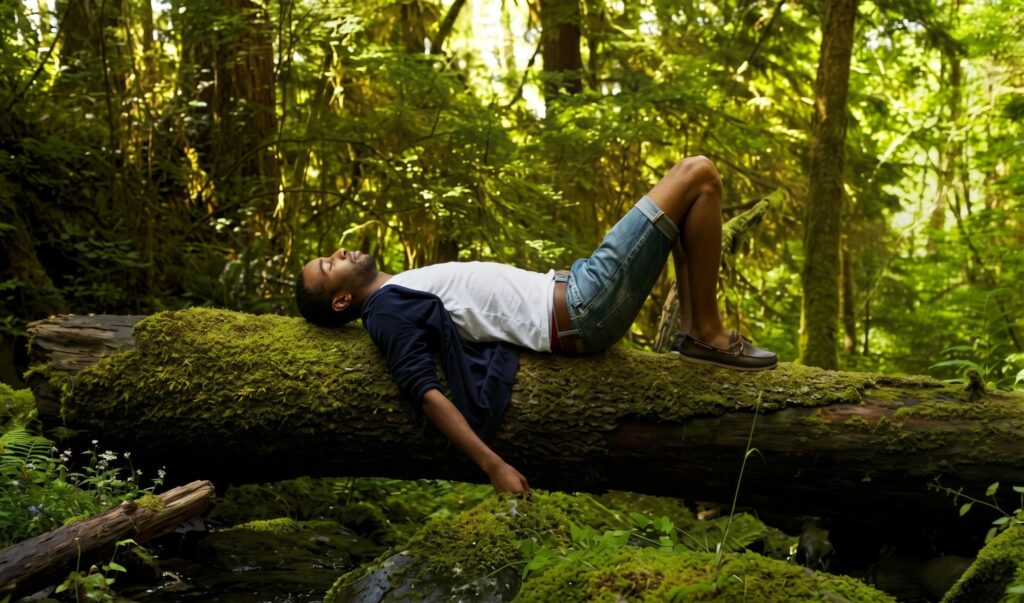
When we are in stillness we might sit on a rock, or a bench, or even lie on the forest floor to fully absorb the natural surroundings. This aspect of the practice fosters deep relaxation and sensory connection.
- Engage All Your Senses
Don’t rush through the experience. When we stop in one place we deepen the experience. Touch the leaves, listen to the wind, and savour the air. Walk slowly and interact with nature. Let yourself be fully present.
- Put Away Your Phone
Forest bathing is about connection—not just with nature, but with yourself also. Turn off your phone and eliminate any possible distractions such as other devices.
- Make It Regular
If you have the opportunity and somewhere suitable, try integrating it into your routine, like a weekend walk or a morning stop in a nearby park, so you are doing it regularly.
- A Familiar Place
While it’s great to experience a variety of forest bathing locations, doing it in a regular place allows further advantages. If you can find a suitable place near where you live or work, frequent visits allow intimate knowledge of it. Visiting often, touching the plants and earth, and noticing changes over time can encourage a particularly strong connection to nature that can carry over into other parts of your life.
- Talking
The practice generally emphasizes quietness and mindfulness. The goal is to fully immerse yourself in the natural environment and deepen your connection with nature. While occasional, thoughtful conversation that enhances your experience can be beneficial, too much talking may take away from the sense of peace and presence that forest bathing encourages.
At the heart of it, forest bathing reminds us of something we’ve forgotten: we are a part of nature, not separate from it. In a world that constantly pulls us in different directions, stepping back into the nature ultimately brings us back to ourselves.
Where It All Comes Together
Forest bathing is about immersing ourselves in a natural space and letting the restorative power of nature seep on in and work its wonders. By just being there, observing in the here and now, staying sedentary, and being aware of one’s senses we maximise the opportunity for the myriad of subtle benefits to flow.
Grounding oneself in the moment we are also practising mindfulness and staying in the present, which brings its own benefits. While we are there it’s important to recognise that we are also learning something even more significant.
Free from the numerous distractions of our modern life, the soft fascination in forest bathing allows us to effortlessly give our attention. Now, without diversions, it is easy for our thoughts to ponder on nature, to wander with the detail that is presented. We are free here to notice nature – and this is key – to spend time pondering it, and its numerous small details and features. This reflective way of being with nature is something our ancestors did, for many millions of years. To notice all the different aspects and subtle variations, to be aware of it. It is something we were shaped to do, over a very long period. In a very real sense, we are coming back to our original selves.
So in forest bathing you get the benefits of nature’s in-situ restorative powers, and scientific research shows you are also in a space where you get a small but important taste of practicing nature connection, – a vital step toward being connected to the natural world.
This connectedness to nature is identified by researchers as being where the majority of the significant well-being benefits lie. For nature’s deeper benefits, and optimal long-term well-being, this is the space we want to be in.
How will you connect your forest bathing with your everyday life? If you’re looking for guidance, here’s a simple way to start: